

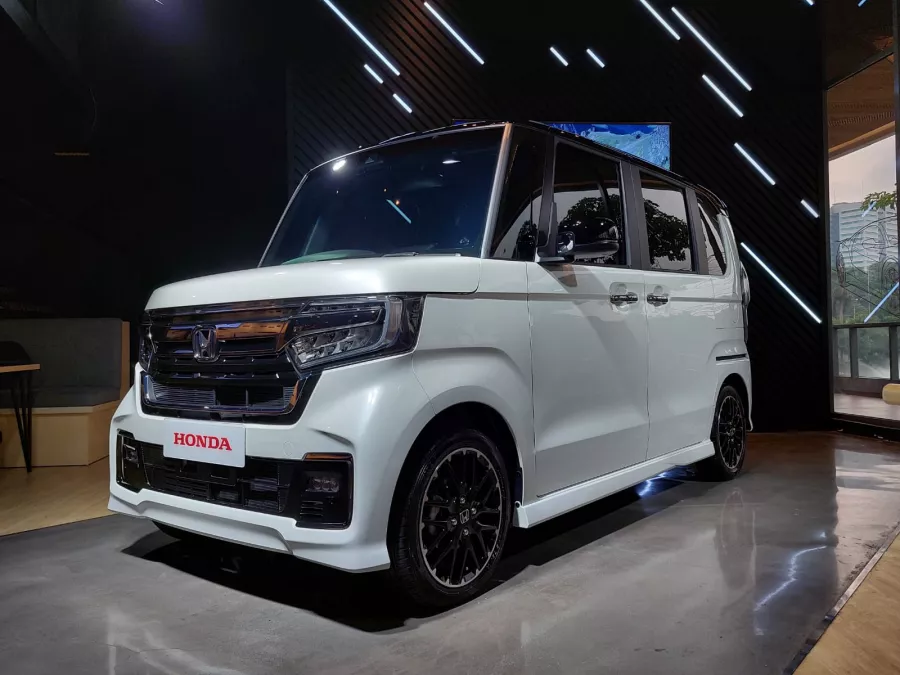
Photo: Honda Indonesia
REPUBLIKA – Japanese automakers are changing their electric vehicle (EV) strategy by focusing on mini cars known as kei cars.
This move aims to accelerate EV adoption and challenge China’s dominance in the global automotive market.
A senior executive from a Japanese car manufacturer said the kei car concept has proven itself for more than 70 years and has shaped Japan’s modern automotive industry. These mini cars are known for being efficient, affordable, and suited to domestic market needs.
This new approach marks a shift from the old view that electric cars must be large and high-powered. By focusing on kei cars, production costs become lower, and selling prices can compete with gasoline-powered cars.
A startup company, KG Motors from Hiroshima, is one successful example. The firm has developed a single-seater electric car resembling a golf cart, and more than half of the 3,000 total units have already been ordered for delivery by 2027.
The popularity of mini cars has attracted major manufacturers such as Toyota, Honda, and Suzuki. These cars are favored because they are fuel-efficient, easy to park, and receive tax and insurance incentives. As of March 2025, kei cars accounted for more than one-third of new car sales in Japan.
Suzuki showcased its Vision e-Sky electric car concept at the 2025 Japan Mobility Show and collaborated with Toyota to develop a small electric van. Honda introduced the retro-styled N-ONE e, while Toyota presented its mini version under the Daihatsu brand. Mazda and Subaru have also followed the same direction.
The Japanese market has chosen a different path from the United States and Europe, which rely on large EVs with long driving ranges. Japan believes smaller cars are more practical, quicker to charge, and far more affordable for consumers.
This strategy aligns with China’s success through the Wuling Hongguang Mini EV, which once became the best-selling electric car in the country. The low-cost and compact model managed to attract consumers away from conventional vehicles.
Although this trend is positive, EV adoption in Japan remains low. Pure electric vehicles still account for less than two percent of total registered passenger cars. The government is now increasing incentives and expanding charging station development to promote EV use.
Most Japanese consumers have not made EVs their primary vehicles due to limited driving range and a lack of charging infrastructure. Only one-third of households own more than one car, making efficiency a key consideration.
Japan’s position in the global automotive industry is now under pressure due to slow adaptation to electric technology. A merger plan between Honda and Nissan to strengthen research and funding failed to materialize. Nissan, once a leader with its Leaf model, has lost its edge, while Toyota and Honda continue to rely on hybrid and hydrogen technologies.
Two factors are giving Japan new hope. First, large investments by Toyota and Nissan in solid-state batteries, which are claimed to charge faster and last longer. Second, the strong push for electric kei cars, seen as a potential success model in Asia.
If the mini electric car experiment succeeds, Japan could once again become a leader in automotive innovation. The country wants to prove that small cars are not just efficient but can also be the foundation for an affordable electric vehicle future. (*)