

GAIKINDO — Daihatsu Indonesia invited members of the Indonesian media to visit and learn more about one of its automobile production facilities in Japan on October 27, 2025. Daihatsu Motor Co., Ltd., the principal company in Japan, operates a total of five factories located across four different areas. These five Daihatsu plants in Japan include the Kyoto Oyamazaki Plant, Shiga Ryuo Plant, Headquarter Ikeda Plant, and two factories located in Kyushu Oita.
Altogether, these five factories have a combined annual production capacity of up to 940,000 vehicles under the Daihatsu and Toyota brands. As one of the most innovative manufacturing plants within the Daihatsu Group in Japan, the Kyoto Oyamazaki Plant also represents the company’s strong commitment to achieving carbon neutrality.
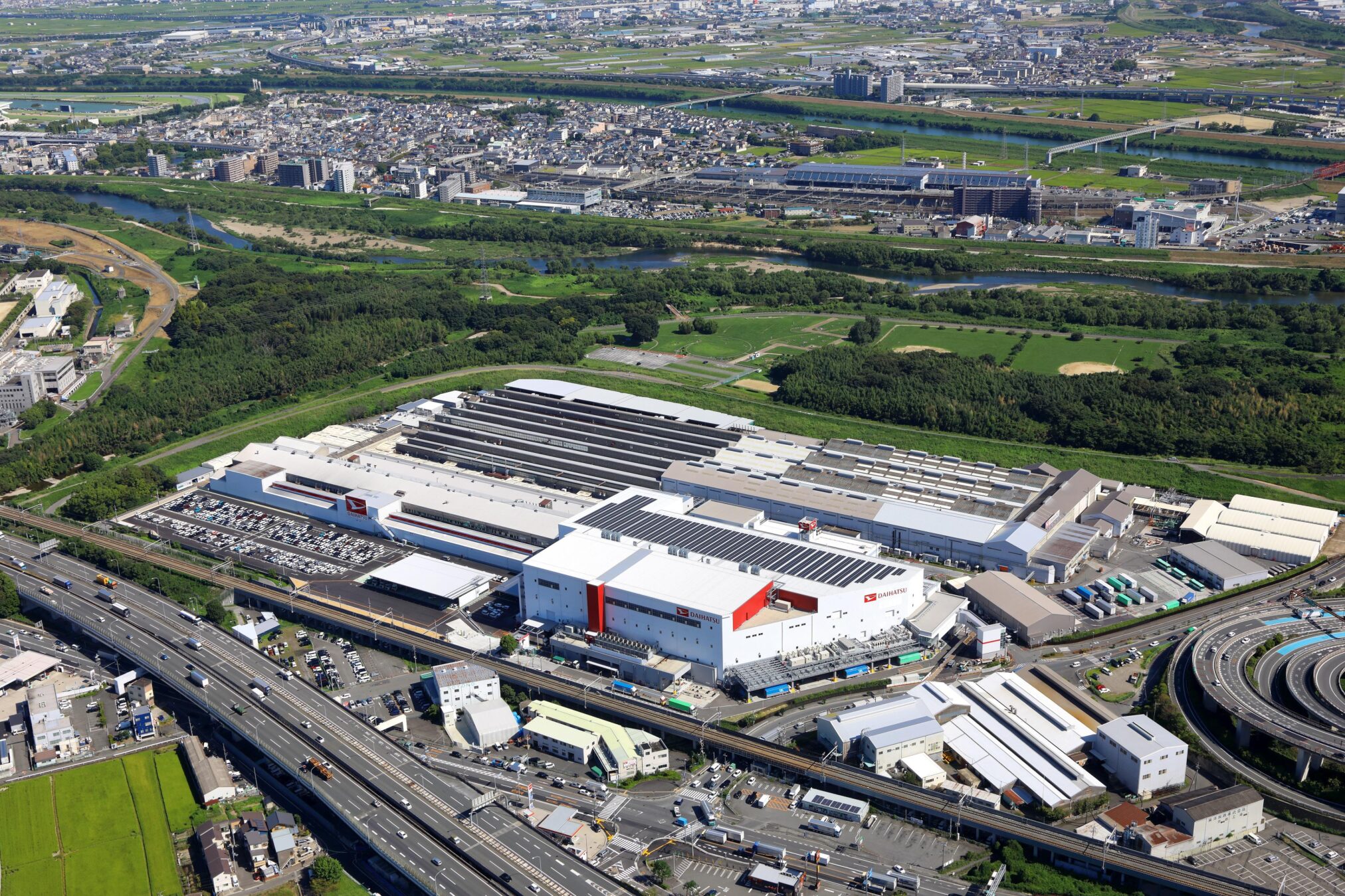
Situated on a site covering more than 16 hectares, the Kyoto Plant has an annual production capacity of around 230,000 units. It’s approximately 24 percent of Daihatsu’s total production capacity in Japan. This plant is capable of producing a unit in less than one minute (takt time) to meet customer demand.
The Kyoto facility manufactures two models for the Daihatsu and Toyota brands. The Daihatsu Thor and its collaborative models—the Toyota Roomy and Subaru Justy—as well as the Toyota Probox, a commercial vehicle for Toyota’s global markets. In the past, this plant also produced the iconic Daihatsu Midget, known in Indonesia as the “Bemo,” a legendary three-wheeled vehicle with historical significance in the country.
The Daihatsu Kyoto Plant has been in operation since 1973. Cumulatively, the plant has produced more than 6.8 million vehicles over its 50-year history. The facility underwent major upgrades in 2022 to enhance its manufacturing competitiveness, improve environmental performance, increase productivity, and create a more employee-friendly workplace.
All Daihatsu factories operate under the Simple, Slim, and Compact (SSC) concept. Daihatsu’s production system is designed with high flexibility, operational efficiency, and adaptability to meet various production requirements and customer needs. The SSC concept forms the foundation of Daihatsu’s manufacturing philosophy. This concept is focused on optimizing hardware development while simultaneously improving communication and collaboration among employees.
Beyond efficiency, the Kyoto Plant is also environmentally friendly thanks to improved energy management. It utilizes multi-story building designs, introduces a new paint shop technology with air-conditioning recycling by dry booth, and makes use of solar power. These efforts have reduced carbon dioxide (CO₂) emissions by 42 percent compared to the pre-renovation period.
In terms of productivity, the plant has been redesigned to be more ergonomic and employee-oriented. Processes such as vehicle painting, which were previously done manually, are now handled by robots. Several work areas that required excessive movement have also been synchronized to boost efficiency.
In the assembly area, Daihatsu provides access seats to simplify the installation of vehicle interiors and reduce operator fatigue. Daihatsu also continues to promote digitalization in its factories with the use of Artificial Intelligence (AI). The company is implementing a system that automatically monitors production processes and performs predictive maintenance. This approach enables early preventive action. With all these advancements, the Kyoto Plant has become a comfortable and inclusive workplace for employees of all ages and genders.
As an integrated plant, the Kyoto facility combines production, logistics, and testing functions within one site—improving work efficiency while maintaining production quality consistency. Each Daihatsu plant is uniquely designed to suit its local environment and operational optimization needs.
For example, the Kyoto Plant features multi-story enclosed buildings designed for Japan’s four distinct seasons with varying temperatures and humidity levels. It is equipped with comprehensive air-conditioning and environmental control systems to ensure comfortable working conditions year-round.
The Daihatsu Kyoto Plant also opens its doors to the public every summer through free guided factory tours as part of its educational outreach programs. This initiative gives visitors an opportunity to observe firsthand how Daihatsu vehicles are produced to high-quality standards.
The Daihatsu Kyoto Oyamazaki Plant also serves as the mother plant for PT Astra Daihatsu Motor’s Karawang Assembly Plant 2 in Indonesia, which was inaugurated in February 2025. Various innovations and the SSC concept developed in Kyoto have been adopted and adapted to suit local characteristics at the Karawang facility.
Daihatsu’s vehicle production process begins with the press shop and welding stages. In these stages, metal components such as floors, doors, and roofs are joined using automated robots to ensure structural strength and compliance with global safety standards.
Next comes the painting stage. In this stage, vehicle bodies are coated with anti-corrosion materials, followed by color application and finishing in enclosed, dust-free rooms. Daihatsu employs an energy-efficient and eco-friendly paint booth system with automated monitoring to ensure smooth coating results while significantly reducing CO₂ emissions.
After painting, vehicles proceed to the assembly stage. Technologies such as the stop-line system allow workers to focus on accuracy and AI-based quality inspection for improved precision. Ergonomically designed tools and equipment also ensure worker comfort and safety throughout the process.
Finally, each vehicle undergoes a quality inspection. This process utilizes digital systems and tablets to ensure consistency and accuracy before being shipped to customers.
According to Daihatsu’s fiscal year 2022 production data, the company’s global production volume exceeded two million units. This figure includes output from Daihatsu’s plants in Japan, Indonesia, Malaysia, and Thailand, as well as Toyota’s overseas facilities. The contribution of each production facility highlights Daihatsu’s vital global manufacturing network in meeting both domestic and international market demand. (*)