

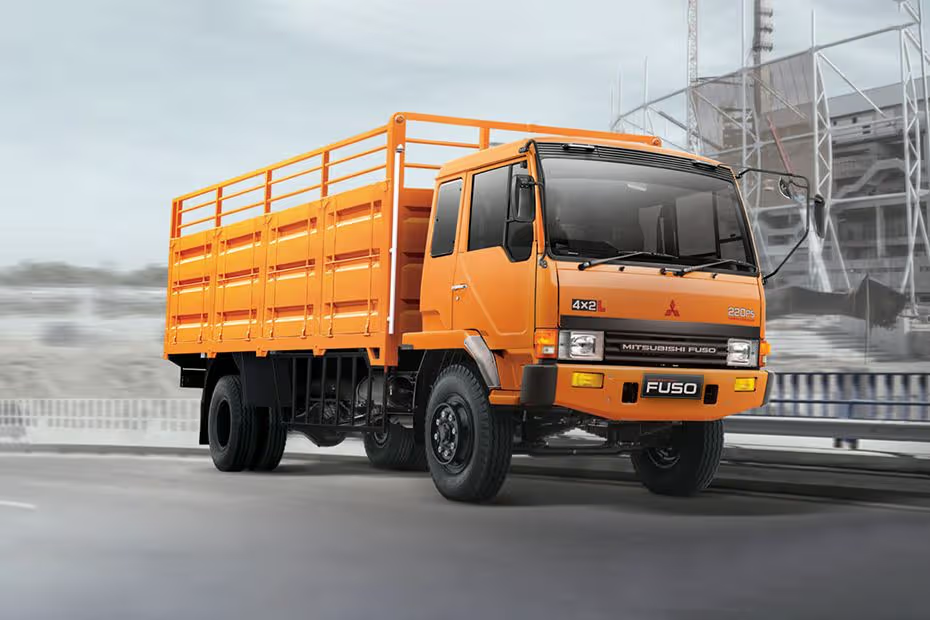
CNN INDONESESIA – PT Krama Yudha Tiga Berlian Motors (KTB), the holder of the Mitsubishi Fuso brand, marks its 55-year presence in Indonesia. As of October 2025, Fuso’s total sales have reached around 1.5 million trucks. The brand continues to maintain its position as the market leader in commercial vehicles with a 39.7 percent share.
For decades, Mitsubishi Fuso has contributed to the development of Indonesia’s commercial vehicle industry. These contributions include investment, empowerment of local component suppliers, and the creation of jobs. Such activities play a crucial role in supporting the growth of the national automotive ecosystem.
KTB’s Sales and Marketing Director, Aji Jaya, stated that the company prioritizes investment in local labor. The Krama Yudha Ratu Motor (KRM) assembly facility functions not only as a production center but also as a source of employment.
KTB has also expanded its business network through 226 dealerships across Indonesia. The company partners with around 100 local suppliers that provide components and materials for the automotive supply chain. This step is aimed at strengthening the structure of the national industry.
KRM currently utilizes automation in its truck assembly processes. Automation refers to the use of machines or robots to enhance work efficiency. KRM President Director Duljatmono explained that the current level of automation is sufficient, and adding new technologies is not yet a priority.
Automation investment must align with production volume to remain efficient. According to him, the company will consider increasing automation gradually. Such considerations are based on technological needs and the balance of investment costs.
KRM also stated that it is ready to produce electric vehicles should market demand increase. The facility is considered flexible enough to adapt to new models, including electric vehicles (EVs) powered by electric motors and batteries. Adjusting technology, however, requires employee training and additional investment.
KRM emphasized its readiness to adapt to these changes. Technological adjustments can be made in line with market needs. This readiness is part of its long-term strategy in the commercial vehicle industry. (*) (*)